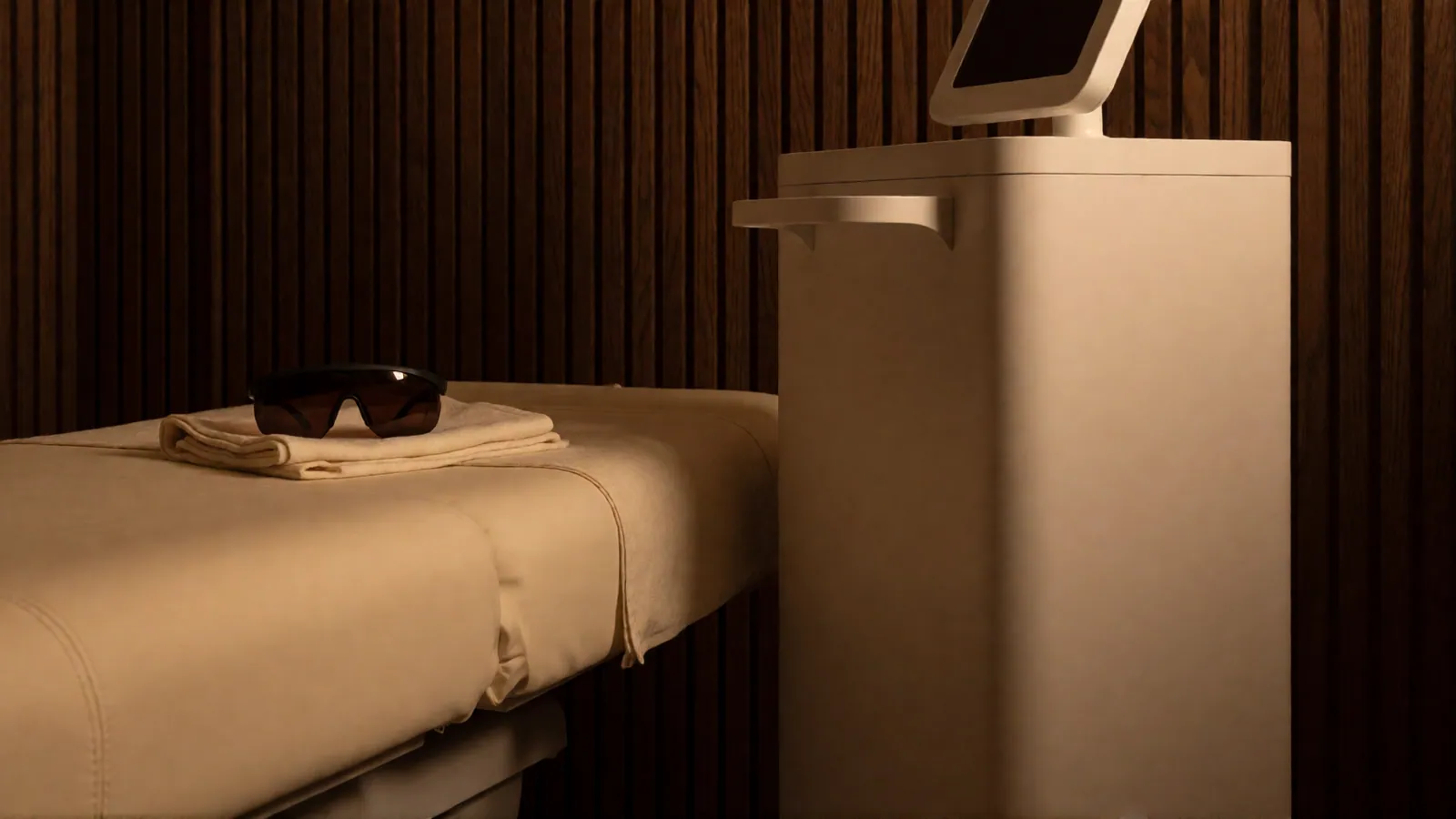
Some things people bring to a med spa need a doctor rather than a treatment room. Some things people bring to a med spa are not aesthetic problems and need a doctor rather than a treatment room. See a physician or a dermatologist, not us, if you have a mole or a mark that has changed shape, colour or size, or that bleeds, itches or will not heal; a sore anywhere that has been there more than three weeks; a rash you cannot explain; a patch of skin that is newly numb, hard or ulcerated; sudden hair loss in patches, or hair loss alongside fatigue or weight change; or swelling, heat and spreading redness that could be an infection. And if you have had filler treatment anywhere and the area becomes white or mottled, severely painful, or your vision changes, that is an emergency — telephone us immediately if we treated you, and go to an emergency room if you cannot reach somebody within minutes. We would far rather you rang a doctor and never rang us at all.
Tattoo ink sits in particles too large for the body to remove, which is why a tattoo is permanent. A removal laser delivers pulses measured in billionths or trillionths of a second — short enough that the energy shatters the ink particle rather than heating the surrounding skin. The fragments are then cleared gradually by the immune system over the following weeks, which is the slow part and the part nobody can speed up.
Because clearance is biological, sessions must be spaced six to eight weeks apart, and a full removal commonly takes eight to twelve of them — sometimes more for a dense professional piece, sometimes far fewer for an old faded amateur one. That means most removals run across a year or two. Anybody quoting you three sessions is quoting for fading rather than removal, and it is worth establishing which of those two you actually want.
Colour matters more than size. Black and dark blue absorb most wavelengths and clear best. Red and orange respond well to the right wavelength. Green and bright blue are stubborn. Yellow, white and some pastel inks are frequently very difficult or effectively impossible, and white ink can darken irreversibly on treatment. We look at what you have and give you an honest session estimate and an honest answer about what will still be visible at the end.
What clears, what resists, what we will not treat
An honest assessment before you spend a year on this.
Black and dark blue
The best-responding inks. An amateur black tattoo can be nearly gone in four to six sessions; a dense professional one takes eight to twelve. This is the bulk of what we treat and the results are genuinely good.
Red, orange, purple
Respond well with the appropriate wavelength, usually over a similar number of sessions to black. Red occasionally provokes a delayed allergic reaction on treatment — an itchy raised area weeks later — which is uncommon, manageable, and worth knowing about beforehand.
Green, bright blue, yellow and white
The difficult end. Green and bright blue need a specific wavelength and many sessions and may still leave a shadow. Yellow and white frequently do not clear at all, and white ink can oxidise and turn grey or black on the first pulse — permanently. We test a small area of any white or pastel ink and show you the result before going further.
Cosmetic tattoo and permanent makeup
We do not treat these. The pigments used contain compounds that can darken instantly and irreversibly on laser exposure, they sit close to the eye, and the consequences of getting it wrong are on somebody's face. This needs a practitioner who specialises in it, and we will say so.
The session and the fortnight after
Short, sharp, and with a recovery that needs looking after.
The session
Very quick — a small tattoo takes a couple of minutes. It is the most painful thing we do, described as hot elastic bands or spattering fat. Numbing cream, cooling air and taking short breaks all help. The treated area goes white and raised immediately, which lasts about twenty minutes.
The first week
Redness, swelling, tenderness and often blistering — which is expected rather than a complication, and which must be left alone. Keep the area covered, clean and dry, use the ointment we give you, and do not pick a blister or a scab. Picking is the main cause of scarring in tattoo removal.
Weeks two to eight
Fading, which is the immune system carrying the ink away. Most of the visible change from a session happens between weeks three and eight, which is why the next session is scheduled at six to eight weeks rather than at four.
Sun protection throughout
The treated area must be kept out of the sun for the whole course. Tanned skin cannot be safely treated, so a summer of sun on the area means a summer of postponed sessions, and a course that was going to take fourteen months takes twenty.
Risks, and the goal worth considering instead
Removal is not always the sensible objective.
Pigment change and scarring
The area can be left lighter or darker than the surrounding skin, particularly on richer skin tones and particularly if blisters are picked. Some texture change is common where a tattoo was dense. Scarring is uncommon with correct settings and correct aftercare, and considerably more likely with either done badly.
Ink darkening
White, flesh-toned and some pastel inks can turn grey or black permanently on the first pulse. This is why we test a small area first and show you what happened before treating the rest.
Allergic reaction
Uncommon, usually to red ink, and typically appearing as a raised itchy area some weeks after a session. Manageable, and a reason to tell us about anything unusual rather than waiting for the next appointment.
Fading for a cover-up
Often the better goal, and much cheaper. Three or four sessions will lighten most tattoos enough for a tattoo artist to cover them convincingly, at a fraction of the cost and time of full removal. If that is what you actually want, say so at the consultation and we will plan for it.
Laser Tattoo Removal in western Queens
Extremely short pulses of light shatter tattoo ink into fragments small enough for the body to carry away. It works, it takes many sessions across more than a year, and some inks never fully clear.
Every treatment here starts the same way: a full hour at a table in a room with no treatment couch in it, a proper medical history, your skin looked at in daylight, and then a plain statement of what we think would achieve what you described. You are told what it costs, how many sessions it usually takes, how long it lasts, what the recovery looks like and what can go wrong — on paper, to take home and read somewhere other than a treatment room. If the honest answer is a different treatment, or nothing, or a dermatologist, that is what you get instead, and it costs exactly the same.
Aesthetic treatment is elective medicine, and this page is not medical advice for you. Aesthetic treatment is elective, it is medicine wherever it breaks the skin, and nothing on this website is medical advice for you in particular. We do not diagnose disease. Every treatment here begins with a consultation and a medical history, because your health, your medication, your skin type and what you have had done before all change what is safe and what is sensible. Some people are told no. Being told no is a normal outcome of a consultation here rather than a failure of one, and it costs exactly the same as being told yes.
No before-and-after photographs, and no promised outcome. There are no before-and-after photographs on this website and there never will be. Every set you have seen somewhere else was chosen from a much larger pile, and the second picture is usually taken in different light, at a different angle, at a different time of day, often with makeup and frequently after retouching. Even an entirely honest pair shows you what happened to somebody else's face. What we publish instead is what a treatment typically changes, by roughly how much, how long it lasts, how many sessions it usually takes and how often people are disappointed. We do not guarantee an outcome, we cannot, and anybody who does is either guessing or selling.
The risks, plainly. Every treatment on this site has side effects and some carry real risks. The common ones are minor and short-lived — redness, swelling, tenderness, bruising, a day or two of looking like you have had something done. The uncommon ones matter more: burns, blistering and long-lasting pigment change from light-based treatment, which is a greater risk on deeper skin tones and on recently tanned skin; infection anywhere the skin is broken; and lumps, asymmetry and, very rarely, a blocked blood vessel from injectable filler, which is the one true emergency in this field. We screen for what makes each of these more likely, we tell you your own risk rather than the average one, and we decline to treat when the answer should be no.
What a med spa does not treat. We treat the appearance of healthy skin, hair and body. We do not diagnose or treat disease. If you bring us a mole, a changing mark, an unexplained rash, a sore that will not heal, skin that has become hard or numb, psoriasis, eczema, an autoimmune skin condition, or hair loss that came on suddenly or in patches, what you will get is the name of a doctor rather than a treatment plan. Aesthetic treatment applied on top of an undiagnosed skin problem can mask it, delay the diagnosis and occasionally make it worse. We would rather lose the booking.
Questions
Laser Tattoo Removal — the questions we are asked most
How many sessions will it take?
Eight to twelve for a typical professional tattoo, four to six for an old amateur one, and more for dense multi-coloured work. At six to eight weeks apart, that means a year or two. Anybody quoting three sessions for a full removal is quoting for fading, and it is worth asking them which they mean.
Will it be completely gone?
Often, and not always. Black and dark blue usually clear completely. Green, bright blue and some pastels may leave a shadow that no number of further sessions will shift, and yellow and white frequently do not clear at all. We give you an honest expectation at the consultation, including the possibility that something will remain visible.
Does it hurt more than getting the tattoo?
Most people say yes, but that it is over much faster. It is described as hot elastic bands or spattering fat. Numbing cream applied beforehand and cooled air during the session make it manageable, and a small tattoo takes a couple of minutes.
Will it scar?
Uncommonly, with correct settings and correct aftercare. The main cause of scarring in tattoo removal is picking blisters and scabs, which is entirely within your control. Some texture change where a tattoo was very dense is common and usually mild.
Can you remove my permanent makeup or microbladed brows?
No. Cosmetic tattoo pigments contain compounds that can darken instantly and irreversibly under a laser, they are close to the eye, and getting it wrong leaves a mark on somebody's face. This needs a practitioner who specialises in it and we will refer you rather than attempt it.
Is it safe on dark skin?
It is done, with the appropriate wavelength, conservative settings and a test patch, and the risk of pigment change is genuinely higher. Expect more sessions at gentler settings and a longer course. Marcus treats these and will tell you honestly what to expect before you start rather than after session four.
Related
Often seen alongside this
Laser & Light
Laser Hair Reduction
The most reliably satisfying treatment in this building, provided the expectation is right: it is a permanent reduction rather than a permanent removal, and it takes a course spread across months.
Read more
Laser & Light
Laser Skin Resurfacing
Controlled removal of the surface of the skin so that it heals back smoother, or controlled heating beneath it without breaking the surface. The first works better; the second costs you nothing in downtime.
Read more
Laser & Light
IPL Photofacial
A broad flash of filtered light absorbed by brown patches and red vessels, which breaks them up so the body can clear them. Excellent for sun damage on lighter skin — and genuinely risky on richer skin.
Read moreA written plan and a written price before anything is booked
Book a consultation
Pick a clinician and an hour from the calendar — it shows only the times each of them genuinely has free. A consultation is a full hour at a table with no treatment couch in the room, and it costs $85, or $120 with the medical director. If you go ahead, that comes off your first treatment. If we tell you the answer is nothing, or a dermatologist, it costs exactly the same.